
Robotics and the Next Phase of Industry 4.0 | FXA
Industry 4.0 continues to redefine how manufacturing organizations think about productivity, resilience and long-term competitiveness. What began as a push toward connectivity and digitization has evolved into a broader transformation of industrial systems, where automation, data intelligence, and advanced robotics converge. From FXA Group’s perspective, this shift reflects a deeper structural change in how factories are designed, operated, and scaled in an increasingly volatile global environment.
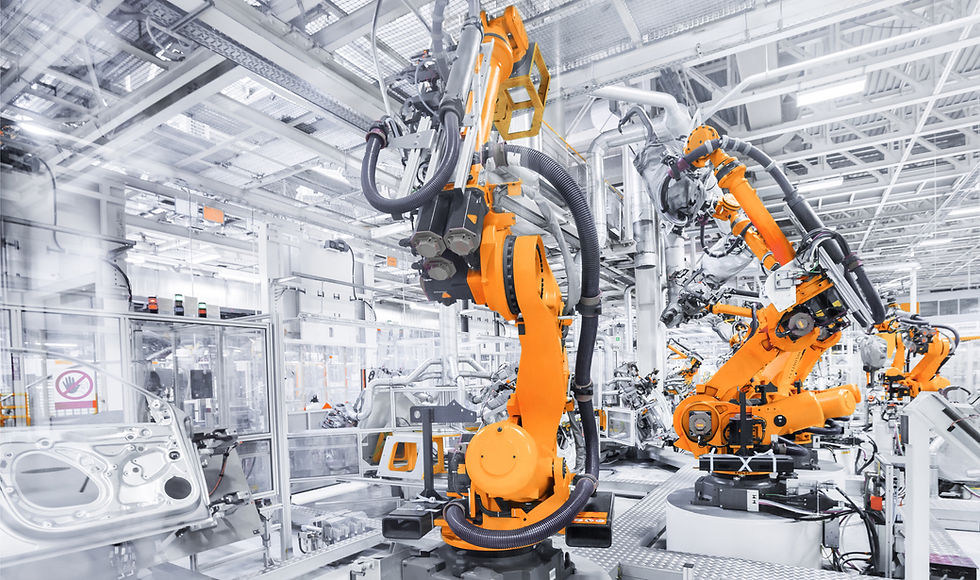
Robotics sits at the center of this evolution. While traditional industrial robots have long been used for repetitive, high-precision tasks, the current wave of innovation is markedly different. New robotics platforms are being developed with greater intelligence, adaptability and autonomy. These systems are no longer confined to static production lines. Instead, they are designed to operate in dynamic environments, respond to variability, and collaborate more closely with human workers. This translation signals a move away from rigid automation toward flexible, software-driven manufacturing systems.
Emerging robotics innovators are accelerating this trend by combining advanced sensing machine vision, and AI-based decision-making. Robots are increasingly capable of handling unstructured tasks, recognizing objects with irregular shapes and adjusting actions based on real-time feedback. In manufacturing environments where product variation and shorter production runs are becoming the norm, this adaptability is critical. It allows automation to extend beyond mass production into areas that previously required manual intervention.
Autonomous mobile robots and intelligent material-handling systems further expand the role of robotics within the factory. Rather than relying on fixed conveyors or predefined routes, these systems navigate dynamically, optimizing movement based on workflow demands and facility conditions. This enables more modular factory layouts and supports rapid reconfiguration when production requirements change. The result is manufacturing environments that is more responsive, scalable and resilient to disruption.
These advancements align closely with the broader objectives of Industry 4.0. Modern manufacturing strategies increasingly emphasize end-to-end visibility, predictive decision-making and continuous optimization. When robotics systems are integrated into connected digital ecosystems, they become active participants in these processes. Data generated by robots feed into analytics platforms, inform digital twins and supports predictive maintenance and performance optimization. This interconnected approach underpins how manufacturing ecosystems are evolving toward intelligent, adaptive automation across the value chain, a direction closely associated with advances in industrial automation architectures.
Beyond operational efficiency, robotics innovation is also reshaping workforce dynamics. Collaborative robots, or CoBots, are designed to operate safely alongside people, augmenting human capabilities rather than replacing them outright. By taking on repetitive or physically demanding tasks, robots allow workers to focus on higher-value activities such as supervision, problem-solving and process improvement. This human-machine collaboration model supports both productivity gains and improved workplace safety, while also addressing labor availability challenges faced by many manufacturers.
However, the path to widespread adoption is not without obstacles. Integration remains a key challenge, particularly in facilities that rely on a mix of legacy systems and newer digital platforms. Ensuring interoperability between robotics, control systems, and enterprise software requires careful planning and architectural alignment. Cybersecurity and data governance considerations also become more complex as autonomous systems gain greater access to operational decision-making processes.
Skill development is another critical factor. As robotics systems become more software-driven, manufacturers must invest in upskilling their workforce to manage, maintain, and optimize these technologies. This includes not only technical skills, but also the ability to interpret data, manage exceptions, and oversee increasingly autonomous operations. Organizations that treat robotics deployment as both a technology and change-management initiative are better positioned to achieve sustainable outcomes.
Market indicators suggest that momentum will continue to build. Robotics adoption is expanding beyond automotive and electronics into sectors such as food processing, pharmaceuticals, and advanced materials. Falling costs, improved ease of deployment, and modular system designs are lowering barriers to entry, enabling small and mid-sized manufacturers to participate in the IR4.0 transition. As a result, robotics is becoming a strategic lever not just for scale, but for differentiation and resilience.
Looking ahead, the role of robotics within Industry 4.0 will continue to evolve. The most successful manufacturing organizations will be those that view robotics not as isolated tools, but as integral components of a connected industrial ecosystem. Strategic alignment, system integration, and workforce readiness will determine how effectively these technologies translate into competitive advantage.
In this context, FXA Group continues to analyses how robotics innovation intersects with broader IR4.0 trends, offering insight into how manufacturers can navigate complexity and position themselves for the next phase of industrial transformation.


